
Real Estate Finance: Designing Capital Around the Asset
From bank lending and private debt to club deals and securitisation, Federico Lione examines why the capital structure must be designed alongside the real estate asset.
Real Estate Finance: Designing Capital Around the Asset
From bank lending and private debt to club deals and securitisation, Federico Lione, Founding Partner of CGPH Banque d’Affaires, discusses how real estate advisory is evolving and why the capital structure must be designed alongside the asset.
A property’s value is not determined by location, construction quality or use alone. It also depends on the financial structure that makes its acquisition, transformation or repositioning possible.
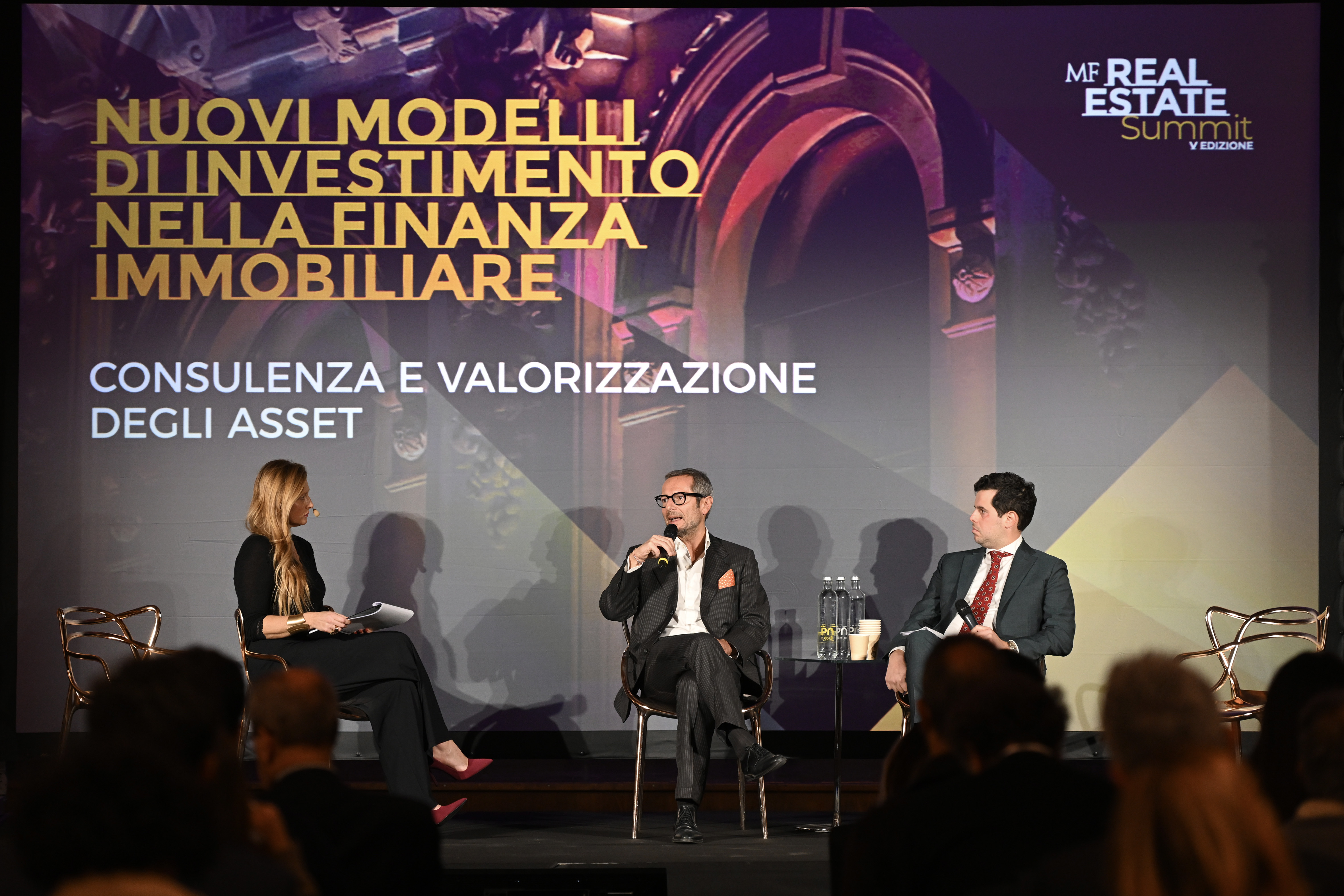
This was one of the themes addressed at the MF Real Estate Summit 2026, organised by Milano Finanza and Class Editori. During the panel New Investment Models in Real Estate Finance: Advisory and Asset Enhancement, I joined Alessandro Busci, CEO of Prelios SGR, to discuss how the market is changing and what owners and investors now require from financial advisory.
From finding finance to building the transaction
For many years, real estate advisory focused largely on intermediation, asset valuation and the search for a bank willing to provide financing. Today, that approach is no longer enough.
Bank lending remains essential. Yet more selective underwriting, the cost of capital and the growing complexity of projects mean that financing must be considered from the outset. Capital, cash flows, execution timelines, governance and the exit route need to work together.
The adviser’s role is therefore broader. It requires an understanding not only of the property, but also of the business and ownership objectives behind it. The task is to assess the available sources of capital, identify pressure points early and present a transaction that banks, funds, institutional investors and family offices can evaluate on its merits.
The adviser needed today is one who can build the transaction, not simply find it a lender.
Liquidity, value creation and generational transition
Three recurring situations illustrate the change.
The first is liquidity. Families and companies may own substantial property portfolios that remain illiquid. A sale is not always the most efficient answer. Refinancing, introducing new capital or reorganising ownership may release resources while preserving the long-term value of the estate.
The second is value creation. Refurbishment, conversion, energy improvements and changes of use require capital, specialist expertise and a timetable suited to the project. Even a strong asset can remain underutilised when its financial structure does not support the intended transformation.
The third is generational transition. An undivided, fragmented or low-yielding property portfolio can become difficult to govern. A well-designed financial solution can help separate family needs from asset management, create liquidity and make the allocation of value more transparent.
What investors need to see
Investors, meanwhile, are looking for transactions they can understand and underwrite: an identifiable underlying asset, assessable cash flows, defined governance and a return that reflects the risks assumed.
This helps explain why exposure to real estate increasingly takes the form of financial structures rather than direct property ownership alone. Real estate funds, private debt, mezzanine finance, joint ventures, club deals and securitisations serve different purposes. They are not interchangeable.
The appropriate instrument depends on the asset, the stage of the project, the owner’s objectives and the investors involved. Instrument selection should follow the analysis of the transaction, not precede it.
Securitisation as a possible bridge to capital markets
Among the available tools, securitisation can create a direct connection between an asset or pool of assets, the cash flows it may generate and investor capital.
In Italy, Law No. 130 of 1999 provides a framework for certain securitisation transactions. The allocation of relevant SPV assets and proceeds to the rights of noteholders is a feature of that framework. It does not remove risk; it helps define where that risk sits and requires disciplined design and execution.
In real estate, such structures may be considered for selected development or refurbishment projects and for existing portfolios capable of producing cash flows. They are neither a shortcut nor a standard solution for every asset.
A sustainable structure begins with a prudent assessment of the asset and a business plan tested against adverse scenarios. The tenor of the capital must fit the project timetable, the governance must be clear and the exit strategy credible. Legal, tax, regulatory, valuation and servicing matters remain the responsibility of the relevant qualified professionals and authorised parties.
Alignment comes before complexity
The quality of a financial structure is not measured by its complexity. It depends on whether the interests of the owner, sponsor, lenders and investors are genuinely aligned.
A transaction is well constructed when value creation comes from executing the project, the allocation of risk is intelligible and each participant understands their responsibilities, incentives and time horizon.
This is the most important change in real estate finance advisory: moving beyond the financing of a property to designing the conditions under which the asset can create sustainable value.
At CGPH Banque d’Affaires, the starting point is the client’s business and ownership objective. From there, the work is to assess the appropriate financing routes, coordinate the relevant professional workstreams and structure an effective dialogue with capital providers.
Advisory creates value not by adding complexity, but by making a credible project financeable.
Watch the full panel
Watch the discussion on the Milano Finanza video centre.
Further reading
This article is provided for general information only. It does not constitute investment, legal, tax, regulatory, valuation or financial advice, nor an offer, solicitation or recommendation. Transaction structures depend on their specific facts, applicable law, definitive documentation and the work of the relevant qualified or authorised professionals.