
How Tokenization Revolutionizes Access to Paraíba Tourmaline
Can tokenization unlock the world's rarest gem? Discover how blockchain fractionalizes Paraíba tourmaline.
Paraíba Tourmaline Tokenization: A Strategic Framework
##An Exclusive Market Looking to the Future
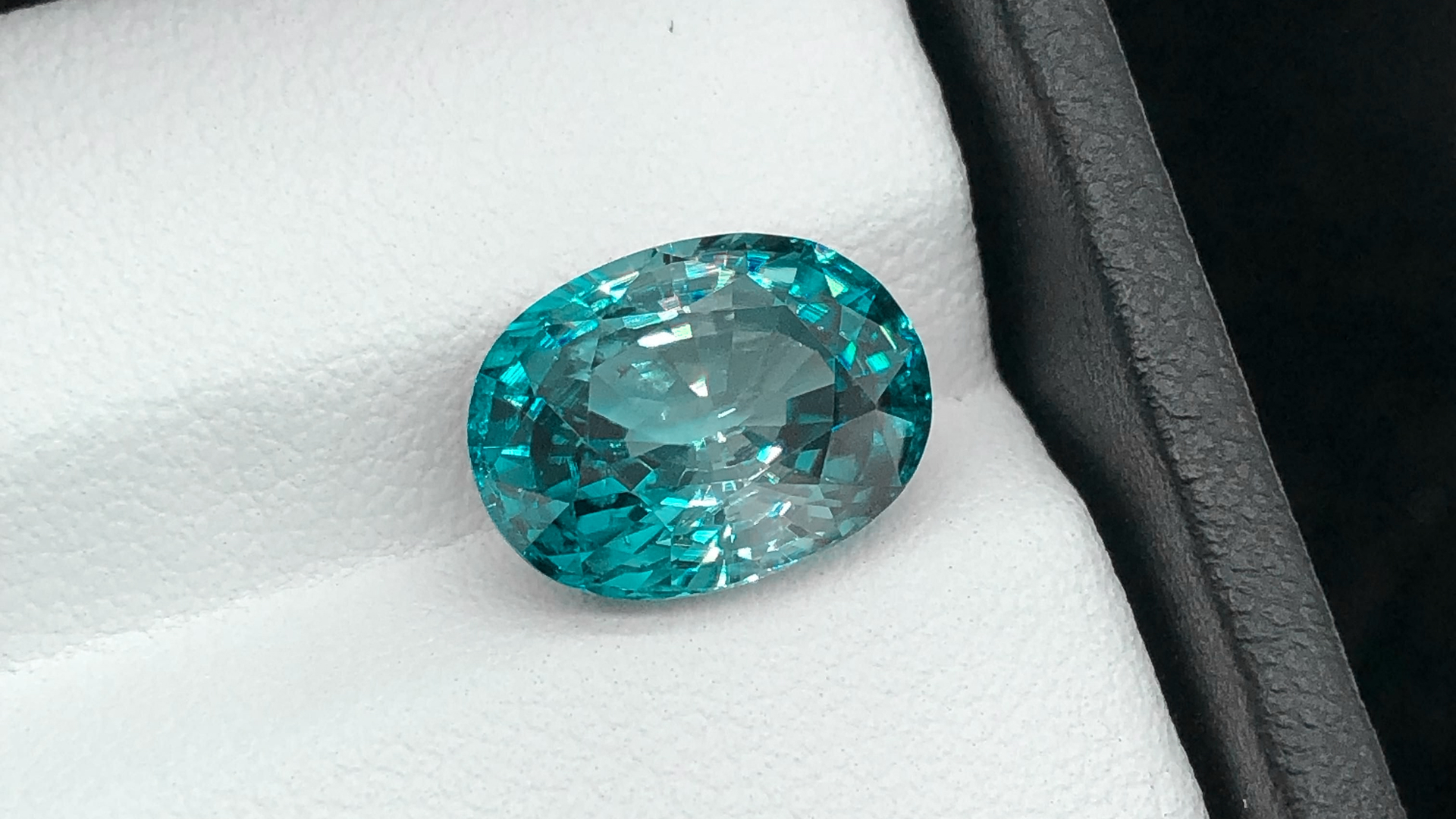
For years, the gemstone market has been considered a world reserved for collectors, high-net-worth families, and specialized dealers. Like works of art, collectible wines, and high-end watches, the rarest gems have represented an alternative form of investment, capable of complementing traditional financial instruments within diversified portfolios. Among all precious stones, however, one in particular has managed to capture the attention of the international market thanks to its practically unrepeatable characteristics: Paraíba tourmaline. Discovered in the 1980s in the Brazilian state of Paraíba, this gem has won over the high jewelry industry with its electric blue color and turquoise undertones, a hue made possible by the presence of copper in its chemical composition. Its exceptional rarity and the limited availability of high-quality specimens have helped make it one of the most sought-after and prestigious stones in the world of gemology. Today, as the financial sector undergoes a profound transformation driven by the digitization of real-world assets, Paraíba tourmaline could become the protagonist of a new era in which technology and tangible goods meet, opening up unprecedented prospects for both investors and the luxury market.
##Why Paraíba Tourmaline Is Considered an Alternative Asset
In financial terminology, alternative assets are investments that differ from traditional stocks, bonds, or money market instruments and are primarily used to broaden a portfolio's diversification. Real estate, works of art, precious metals, private equity, and collectibles are among the best-known categories. Precious stones also fall within this universe because their value depends on factors different from those that influence financial markets. Paraíba tourmaline occupies an even more distinctive position, as it combines geological rarity with international demand sustained by major high jewelry houses, collectors, and investors. The limited availability of the finest gems is one of the factors fueling market interest, although it's essential to remember that no asset, however rare, automatically guarantees an increase in its value over time. Like any other investment, investing in precious gems is subject to the dynamics of supply and demand, the state of the global economy, and evolving consumer preferences.
##The Power of Scarcity in Gemstone Value
One of the aspects that makes Paraíba tourmaline so fascinating to investors is its natural scarcity. The first Brazilian mines produced extremely limited quantities of exceptional-quality material, and although new deposits have since been discovered in Africa, the finest specimens remain rare. In economics, scarcity is one of the main factors contributing to the formation of an asset's value. When a product cannot easily be substituted and supply remains limited over time, the market tends to assign it high economic value. In the case of Paraíba tourmaline, this principle is reinforced by the uniqueness of its color, which is difficult to replicate in other natural gems, and by the growing interest shown by the luxury industry. The combination of reduced availability and international demand has turned this stone into a symbol of exclusivity, meaning every certified specimen is evaluated with great care based on clarity, color saturation, transparency, and size.
##The Role of Diversification in Wealth Building
In recent years, the concept of diversification has become central to the investment strategies adopted by both institutional investors and private wealth holders. Building a portfolio made up exclusively of listed financial instruments means being exposed to market fluctuations, which can be influenced by geopolitical events, economic crises, interest rate changes, or shifts in monetary policy. For this reason, many wealth advisors consider allocating a portion of a portfolio to alternative assets, with the goal of spreading risk across categories characterized by different dynamics. Precious stones, being physical and naturally limited goods, can represent a component of this diversification strategy, provided they are considered as part of a balanced approach consistent with the investor's objectives. Thanks to its distinctive characteristics, Paraíba tourmaline fits into this scenario as one of the most exclusive assets in the gemological sector, capable of attracting those seeking tangible assets with strong symbolic as well as economic value.
##The Barriers That Have Limited the Market Until Now
Despite growing interest in rare gems, the Paraíba tourmaline market has for a long time remained accessible only to a small circle of dealers. The reasons are numerous and concern both the economic value of the stones and the complexity of the operations required to purchase and preserve them. Top-quality specimens can reach very high prices, requiring investments that often exceed the means of most savers. Added to this is the need to rely on recognized gemological laboratories to obtain authoritative certifications, the requirement to store the stones in high-security vaults, and the importance of taking out adequate insurance coverage. Resale also requires specific expertise and is not always quick, since it's necessary to find buyers genuinely interested in a gem with such particular characteristics. All these factors have helped keep the sector relatively closed, reinforcing the idea that precious stones represent a market intended exclusively for large fortunes.
##Blockchain Opens a New Chapter for Real-World Assets
In recent years, blockchain technology has begun to profoundly change the way real-world assets are managed and traded. After finding application in the cryptocurrency sector, this technology is now establishing itself in the digital representation of tangible goods such as real estate, works of art, precious metals, and collectibles. The principle behind tokenization consists of creating digital tokens that represent an economic right linked to a physical asset. Each token is recorded on a blockchain, making transactions transparent, verifiable, and difficult to alter. In the case of Paraíba tourmaline, this system could make it possible to digitally represent a professionally stored gem, allowing investors to acquire a share of its value without having to purchase the entire specimen. This is a potentially significant shift, as it reduces one of the main barriers that has historically characterized the sector: the high initial capital required to access this type of investment.
##Democratizing Access to Paraíba Tourmaline Through Tokenization
The ability to digitally divide the value of a gem through tokenization could represent the most significant change for the Paraíba tourmaline market. Until now, access to this type of investment has been limited mainly by the high price of the finest specimens, requiring substantial capital to purchase an entire stone. With a model based on digital assets, however, a single physical asset could be split into numerous representative units, allowing more investors to participate economically in its value. This process does not change the nature of the gem, which remains a real asset that is stored and certified, but it changes the way people can access it. Tokenization could thus bring the world of precious stones closer to a wider audience, creating a bridge between the traditional luxury market and the world of digital finance. For many investors, this development represents a new opportunity for diversification, as it allows them to consider a rare, tangible asset without necessarily facing the full cost of purchasing a high-value Paraíba tourmaline.
##Greater Transparency and Traceability for a Historic Market
One of the main advantages of tokenization concerns the potential to increase transparency within a sector that, by its very nature, has always been characterized by a strong element of specialization. Evaluating a precious stone requires advanced technical expertise and a deep understanding of gemological characteristics. Through a professionally structured digital platform, each token could be linked to complete documentation about the underlying gem, including certifications, quality characteristics, high-resolution photographs, provenance information, and custody data. Blockchain could also permanently record the key events related to the asset, creating a verifiable history of ownership transfers and transactions carried out. This greater traceability could help reduce some of the issues that have historically characterized the precious stones market, where trust and the reputation of dealers have always played a fundamental role.
##New Liquidity Opportunities for a Traditionally Illiquid Asset
One of the most interesting aspects of tokenization concerns liquidity. Precious stones, unlike publicly traded stocks or other easily tradable financial instruments, can take a long time to sell. Finding a buyer willing to pay the fair value of a rare gem can take months and often involves experts, auction houses, or specialized dealers. Creating a digital token-based market could make it easier to transfer shares representing the economic ownership of the asset, encouraging greater investor participation. Of course, the presence of technology does not automatically eliminate the liquidity problem: for a market to function, there need to be reliable platforms, clear rules, and a sufficient number of participants interested in buying and selling tokens. Nevertheless, the potential of tokenization lies precisely in its ability to transform a traditionally hard-to-trade asset into a more flexible and accessible instrument.
##The Role of Security and Regulation
The growth of digitized investments in real-world assets also brings new responsibilities. The security of gem custody, the accuracy of valuations, and investor protection are fundamental elements for the credibility of the system. A tokenized Paraíba tourmaline must be backed by solid infrastructure, in which the physical stone is genuinely stored, insured, and verified by independent parties. Likewise, platforms offering these instruments will need to operate within a clear regulatory framework, ensuring transparency regarding how tokens are issued and what rights are associated with investors. Blockchain technology can offer powerful tools for improving asset traceability and management, but the value of the project will always depend on the quality of the organization behind it. Trust will therefore remain the central factor, just as it is in the traditional precious stones market.
##Paraíba Tourmaline in the Future of Alternative Investments
The growing attention toward digitized real-world assets is creating a new paradigm in the world of finance. Tokenization makes it possible to imagine a future in which high-value physical assets can be more easily integrated into investor portfolios, overcoming some of the limitations that have characterized traditional markets. Paraíba tourmaline represents a particularly interesting example because it combines characteristics that have always attracted investors: rarity, aesthetic value, international recognition, and limited availability. In an economic environment where many investors are looking for alternatives to traditional financial markets, rare gems could take on an increasingly important role. The ability to access these assets through digital instruments could transform the sector, drawing new generations of investors to a market that has long remained reserved for a select few.
##A Bridge Between Luxury, Technology, and Finance
The story of Paraíba tourmaline shows how the value of an asset can evolve over time as the ways it is perceived and used change. Born as an extremely rare natural formation hidden deep within the earth, this gem first became a symbol of high jewelry and today could transform into a concrete example of integration between the physical and digital worlds. Tokenization does not change the nature of the stone, but it does change the way investors can share in its value. Through advanced technological tools, a traditionally exclusive market could become more open, transparent, and accessible. This does not mean eliminating risk or automatically turning a gem into a profitable investment, but rather creating new possibilities for those who wish to diversify their wealth through exceptional real-world assets.
##The New Era of Digitized Gems
Paraíba tourmaline could therefore become one of the leading figures in the new era of tokenized real-world assets. The combination of the gem's natural rarity and the potential of blockchain technology opens up entirely new scenarios for the alternative investment sector. In the future, the ability to purchase digital shares of certified precious stones could become an increasingly widespread model, allowing a greater number of people to approach markets that were previously inaccessible. The success of this evolution will depend on dealers' ability to guarantee quality, security, and transparency — essential elements for building investor trust.
Paraíba tourmaline therefore represents not only a precious stone with an extraordinary color, but also the symbol of a broader shift in the world of finance: the move from a model based exclusively on direct asset ownership to a system in which technology and real-world assets can coexist, creating new forms of participation. If developed with rigorous standards and in compliance with regulations, tokenization could open a new chapter for the rare gemstone market, transforming one of the most exclusive stones on the planet into a possible meeting point between luxury, innovation, and investment.